Businesses that regularly produce brochures, booklets, catalogs, direct mail, marketing materials, and other high-volume documents may eventually outgrow standard office printing equipment. When printing becomes a major part of daily operations, investing in production printers in Las Vegas may be worth considering.
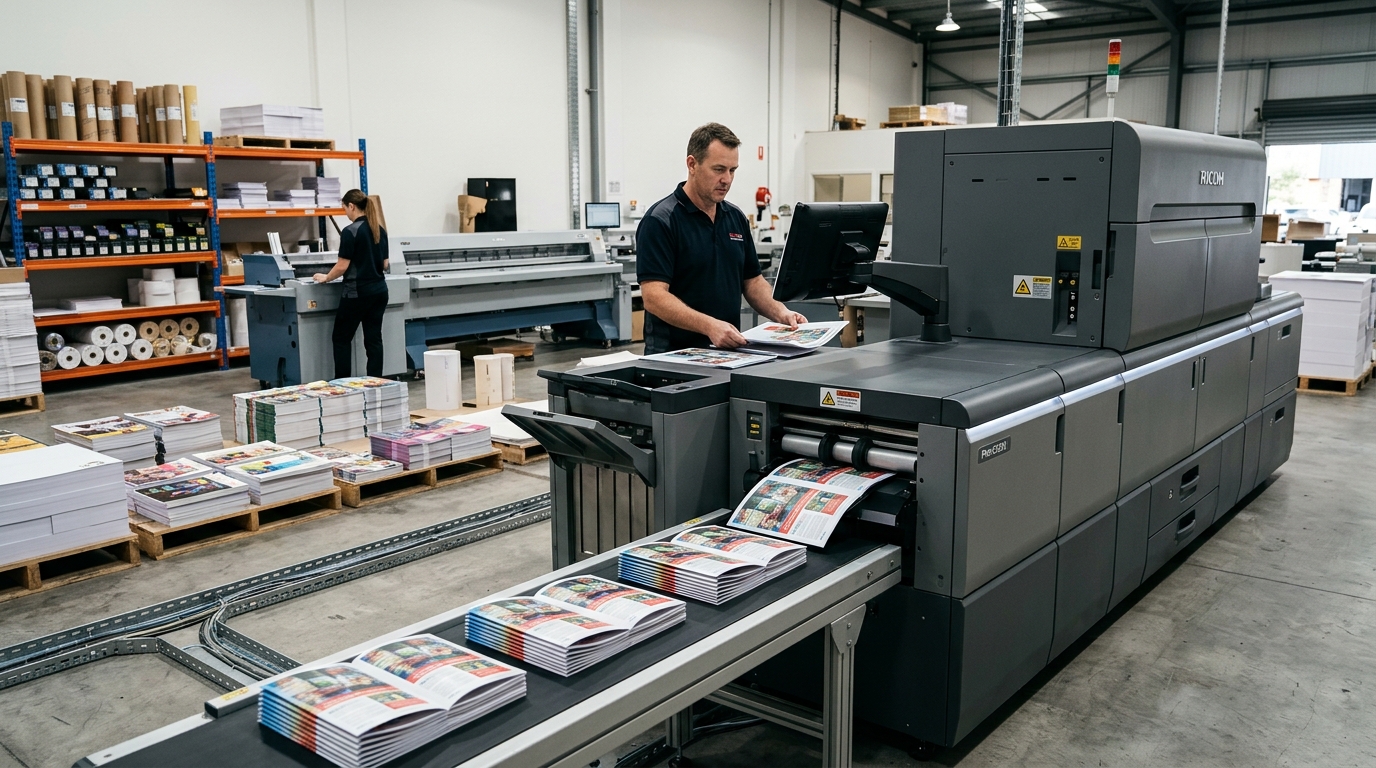
Production printers are designed for demanding print environments where output volume, consistency, speed, and finishing capabilities matter. They are commonly used by commercial print shops, in-house print departments, educational institutions, marketing teams, and organizations that produce large quantities of printed materials.
But how are production printers different from regular office copiers, and when does a business actually need one?
What Is a Production Printer?
A production printer is professional printing equipment designed to handle higher-volume workloads than typical desktop or general office printers.
Depending on the model and configuration, production systems may support:
- High-volume document printing
- Consistent output across large print runs
- Different paper sizes and media types
- Color and black-and-white printing
- Booklet and brochure production
- Advanced paper handling
- Optional finishing equipment
Some systems are designed primarily for monochrome documents, while others specialize in professional color output. The appropriate configuration depends on the types of materials your business produces.
Production Printer vs. Standard Office Copier
A standard office copier is generally designed to support everyday document needs. Employees use it to print reports, copy invoices, scan contracts, and handle routine office paperwork.
A production printer is intended for more demanding environments where printing is a core business function or where large quantities of documents must be produced consistently.
Here are some important differences:
| Feature | Standard Office Copier | Production Printer |
|---|---|---|
| Primary purpose | Everyday office documents | High-volume production |
| Workload | General office usage | More demanding print environments |
| Media options | Depends on model | Often broader options |
| Finishing | Basic or optional | May support advanced finishing |
| Typical users | General businesses | Print shops and production teams |
Not every company needs production equipment. If your office mainly prints routine documents, a commercial multifunction copier may be sufficient.
Which Businesses Can Benefit from Production Printing?
1. Commercial Print Shops
Print shops need equipment that can support customer orders, recurring jobs, and different document types. Production systems can help them manage print runs and offer a wider range of services, depending on equipment capabilities.
2. Marketing and Advertising Agencies
Marketing teams may produce brochures, promotional materials, event programs, and presentation documents. In-house production printing can provide more control over schedules and revisions.
3. Educational Institutions
Schools, colleges, and training organizations often produce instructional materials, handouts, newsletters, and administrative documents in large quantities.
4. Corporate In-House Print Departments
Large companies may have centralized departments responsible for printing internal communications, employee materials, forms, and business documents.
5. Organizations with Recurring Print Jobs
Businesses that regularly print catalogs, manuals, booklets, or other high-volume materials may benefit from equipment designed for consistent production.
Signs Your Business May Need a Production Printer
Not every high-volume office needs a production printer. However, several warning signs suggest it may be time to evaluate one.
Your office frequently outsources large print jobs. If your business regularly pays outside providers to produce materials, compare those costs with the investment required for in-house production.
Your existing copier struggles with workload. Long print queues and frequent interruptions can slow down employees and delay important projects.
You produce the same materials repeatedly. Recurring documents, catalogs, newsletters, and manuals may justify dedicated printing equipment.
You need professional finishing. Some production systems can be configured with finishing options such as booklet making, folding, stapling, or other document-processing capabilities.
Printing has become a business service. If your company sells printed products or provides printing services to customers, production equipment may be an important part of your operations.
Important Features to Evaluate
Print Speed and Monthly Volume
Look beyond advertised speed. Consider your actual workload, peak production periods, and how many jobs your team needs to complete each day.
Ask about recommended monthly volume and duty cycle specifications. These measurements help determine whether a machine is appropriate for your production environment.
Color Quality and Consistency
For marketing materials, brochures, and customer-facing documents, color consistency can be important.
Evaluate sample prints and ask how the system manages color reproduction. Your requirements may differ depending on whether you produce simple office documents or high-quality promotional materials.
Paper and Media Handling
Consider the paper weights, sizes, and media types your business uses. A machine that cannot accommodate your required materials may limit the types of jobs you can complete.
Finishing Options
Finishing equipment can reduce manual work after printing. Depending on the system, options may include folding, stapling, booklet creation, stacking, or other finishing functions.
Workflow and Job Management
Businesses handling multiple print jobs need an efficient way to submit, organize, and manage production work. Ask about workflow tools, network integration, and job management capabilities.
Is a Production Printer Worth the Investment?
The answer depends on how frequently your business prints and what it currently spends on production.
Start by reviewing your monthly print volume and the amount spent outsourcing jobs. Include labor, supplies, maintenance, equipment payments, and any additional operating costs in your comparison.
If your business only produces large print jobs occasionally, outsourcing may remain practical. If printing is a regular and important part of your operations, bringing production in-house may offer greater control over scheduling and output.
Explore Production Printing Solutions in Las Vegas
Choosing production equipment requires more than comparing print speeds. Your business should consider the types of jobs it produces, required output quality, paper handling, finishing needs, and total operating expenses.
Tangerine Office Machines helps Las Vegas businesses explore professional printing and office equipment solutions. Contact the team to discuss your production requirements and determine whether a production printer is the right fit for your business.